
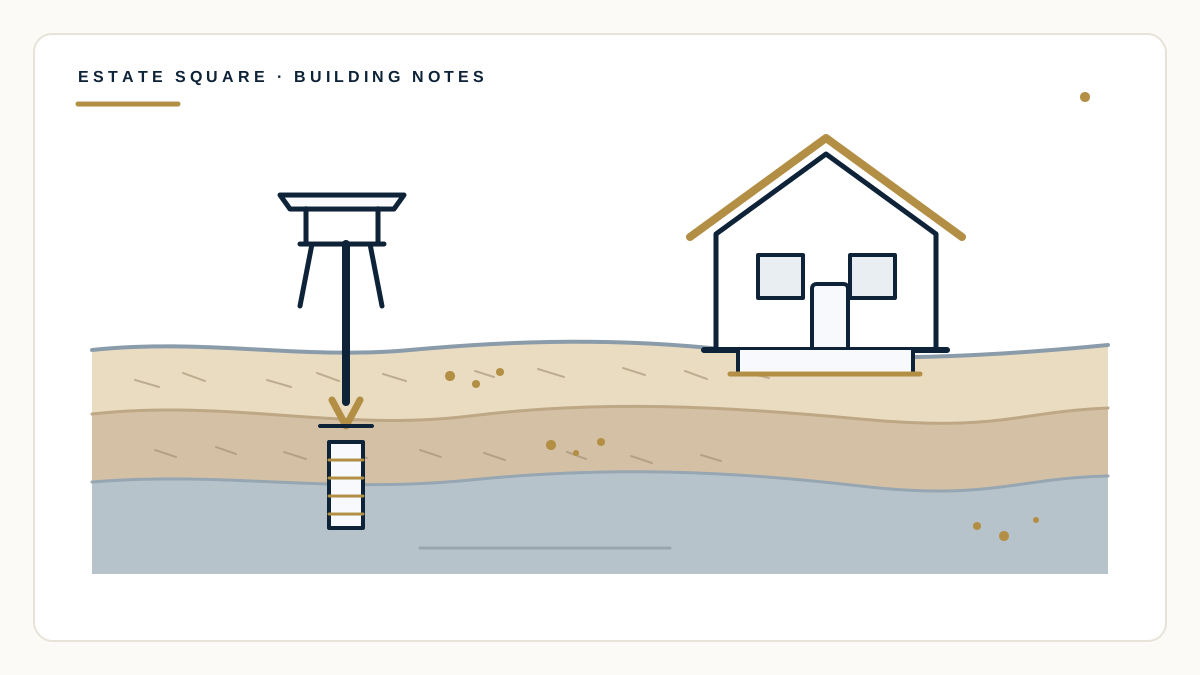
Before you finalise a house design or foundation in DHA Lahore, arrange a soil investigation for your own plot. The surface can look level and firm, but that does not tell you everything about the ground below it.
A soil test, also called a geotechnical investigation, gives your geotechnical and structural engineers information about the ground so they can make decisions for the proposed building. The important point is simple: do not assume that every plot in the same phase has the same soil conditions.
Why the soil under your plot matters
The ground must safely support the weight of the house over time. Soil type, how compact it is, moisture and any filled ground can affect how the foundation should be designed.
Where land has been levelled or filled, the depth and quality of that material can vary from one site to another. The surface alone cannot confirm whether the soil below is suitable for the structure you plan to build.
What can go wrong if the ground is not assessed properly?
Uneven settlement
If different parts of a building rest on ground that behaves differently, one part may settle more than another. This is called differential settlement. It can contribute to cracks in walls, sticking doors and damage to finishes. Cracks can have other causes too, so a qualified engineer should assess any suspected structural problem.
A foundation that does not suit the site
Different ground conditions and building loads call for different foundation designs. A foundation that worked on a neighbouring plot may not be right for your property. Copying another house's drawings without a site-specific assessment can create unnecessary risk.
Repairs that could have been avoided
Changing a foundation after construction has started can cause delay and added expense. Getting the site investigated before the design is finalised gives your engineer better information at the stage when it is most useful.
What should you ask the geotechnical engineer?
Ask a qualified geotechnical engineer or testing firm to explain the proposed investigation for your exact plot and planned building. The engineer should decide the number and depth of boreholes and the required laboratory tests based on the site, the building design and relevant standards—not on a fixed rule copied from a general article.
Request a written report that explains the ground layers found, the test results, any groundwater observations and the recommendations your design team needs. Ask the engineer to explain the findings in plain language and discuss any limitations in the investigation.
Do not choose a foundation by guesswork
A raft foundation, strip footing or another system may be suitable in different circumstances. No single type is right for every plot. The correct choice should be made by the structural engineer using the geotechnical report, the proposed building design and applicable requirements.
If the report identifies filled soil or a need for ground improvement, ask the engineer to specify what should be done and how it should be checked. During construction, follow the written instructions for excavation, backfilling and compaction. Do not rely on verbal assurances alone.
A simple checklist before construction starts
- Arrange a site-specific geotechnical investigation before the foundation design is finalised.
- Share the proposed building plans and intended number of storeys with the engineer.
- Ask for a written report and an explanation of the recommendations.
- Have a qualified structural engineer design or review the foundation for that site and building.
- Keep the report, drawings, test results and written instructions with your construction records.
- Ask the engineer to review unexpected ground conditions discovered during excavation before work continues.
The takeaway
A soil test is not a guarantee that construction will be problem-free, but it gives your engineer information that cannot be confirmed by looking at the plot surface. For a home in DHA Lahore, treat the investigation as part of planning—not as a step to skip in order to start construction sooner.
Important: This article is general information, not site-specific engineering advice. Soil conditions and foundation needs must be assessed by qualified professionals for the individual plot and proposed building.
Take the next step with clearer information.
Browse the property catalogue or discuss your budget and requirements with Estate Square before arranging a shortlist or property visit.
Official transaction information: Read DHA Lahore's Transfer procedures and Transfer Forms. Requirements can vary by property and transaction, so confirm the current process directly with DHA Lahore before paying.